

Tunnel Emergency Telephones: Building a "Lifeline" for Tunnel Safety Communication

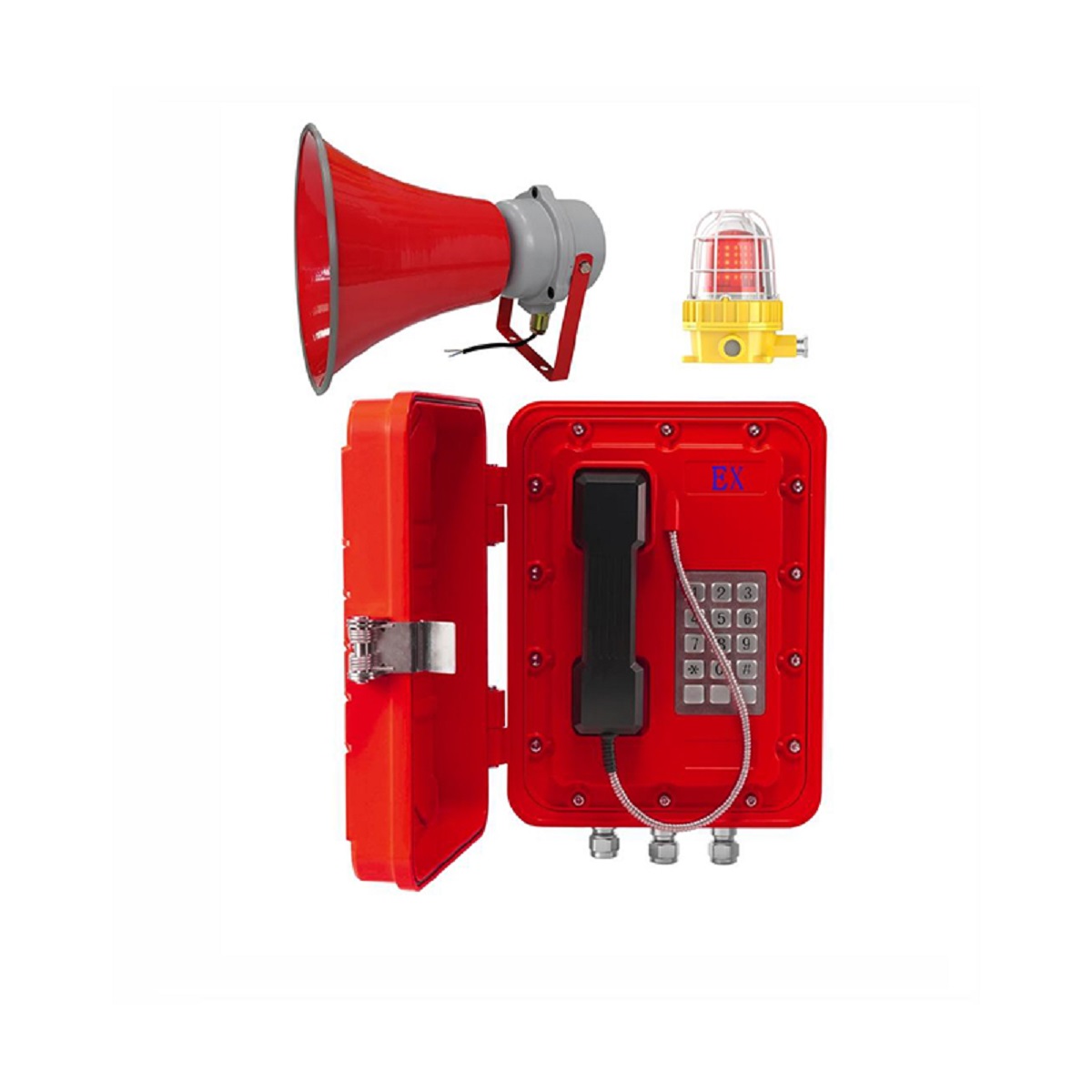
In infrastructure such as highways, urban expressways,
and utility tunnels, tunnels represent a closed, continuous,
and high-risk environment. In the event of traffic accidents,
equipment failures, or sudden disasters, stable and rapid
communication is crucial for successful rescue operations.
Tunnel emergency telephones are core safety
communication devices designed specifically for this purpose.
I. Overview of the Tunnel Emergency Telephone System
The tunnel emergency telephone is an emergency
communication terminal designed specifically for enclosed
spaces such as tunnels. It provides one-touch assistance,
two-way communication, and precise location information
for drivers, passengers, or maintenance personnel at the
first sign of an incident.
This system is developed and manufactured by Acewo,
focusing on applications in the tunnel and transportation
industries, and has been stably operating in numerous
real-world projects.
II. Equipment Appearance and Basic Information
1. Product Basic Information
Brand/Manufacturer: Acewo
Equipment Name: Tunnel Emergency Telephone
Product Positioning: Tunnel emergency communication
and alarm terminal
2. Appearance Design
Eye-catching yellow casing, highly visible in low-light
tunnel environments
Equipped with a white high-decibel speaker component
to ensure clear alerts in noisy environments
Configured with a red emergency call physical button
for intuitive operation and quick activation in emergencies
3. Installation Method
Wall-mounted fixed installation
Can be integrated with tunnel emergency lighting systems,
fire hydrant boxes, and other facilities to save space and
facilitate unified management
III. Technical Parameters and Actual Deployment
1. Applicable Environment
Highway tunnels
Urban underpasses
Integrated utility tunnels and other enclosed or
semi-enclosed spaces
2. Precise Positioning Capability
Supports latitude and longitude coordinate
positioning
Example coordinates:
Longitude: 113.608394
Latitude: 22.754942
After a call is triggered, the command center can
obtain the accurate location immediately, significantly
improving rescue efficiency
3. Typical Application Cases
Tunnel emergency telephones have been successfully
deployed in multiple regions, including:
Dajiao No. 1 Tunnel, Nansha District, Guangzhou City,
Guangdong Province
Xia No. 1 Tunnel, Yongjia County, Wenzhou City,
Zhejiang Province
Pengzu Avenue Station, Yunhu District, Xuzhou City,
Jiangsu Province
IV. Analysis of Tunnel Emergency Telephone Core
Functions
1. Emergency Communication Function
Two-way voice communication to ensure real-time
communication between the site and the monitoring
center
One-button call response, eliminating complex
operations in emergencies
Can be linked with the tunnel emergency broadcasting
system for unified command and information
dissemination
2. Safety Protection and Reliability
Designed for all-weather stable operation in tunnel
environments
Ensures uninterrupted transmission of critical information
in case of accidents, fires, or traffic congestion
Supports integrated installation with fire hydrant boxes to
enhance the integrity of the overall tunnel safety system
3. Operation and Maintenance and Management
Capabilities
The device supports engineering acceptance timestamp
recording, facilitating project management and auditing
Altitude monitoring (e.g., -5.7 meters to 0.0 meters) to
assist in environmental data analysis
Remote monitoring of equipment status, allowing
maintenance personnel to identify potential problems in
advance and reduce maintenance costs
V. Application Value of Tunnel Emergency Telephones
In modern tunnel safety systems, the tunnel emergency
telephone is not only a communication device but also
the starting point of the rescue chain. It effectively solves
the problem of communication blind spots inside tunnels,
gaining valuable time for accident response, emergency
command, and personnel self-rescue.