
What End Devices Are Required For An IP Broadcast Intercom System?
With the growing demand for intelligent management and communication,
IP intercom systems play a vital role across various industries. To achieve
efficient broadcasting and intercom functionality, the configuration of
terminal devices is crucial. Below are the various terminal devices required
to build a complete IP intercom system.
1. Server Configuration
SIP Server: Serves as the core infrastructure, supporting client environment
deployment and capable of installing dedicated broadcast intercom system
software.
Customer-Provided Server Environment: Alternatively, clients may opt for
their own servers to support customized deployments.
2. Front-End Command Equipment
Dispatch Console: Available in multiple sizes to accommodate control centers
or monitoring rooms of varying scales. Supports customizable functional
modules to assist command personnel in daily monitoring and emergency
response.
3. Terminal Device Categories
Telephone Series:
IP Voice Telephone (Standard): Basic voice intercom functionality, suitable
for general office and service environments.
Video Phones (with video capability): Support video calls, suitable for scenarios
requiring video surveillance or face-to-face communication.
Gooseneck Microphone Phones (Conference Type): Designed specifically for
meetings and group settings, supporting clear audio input and output.
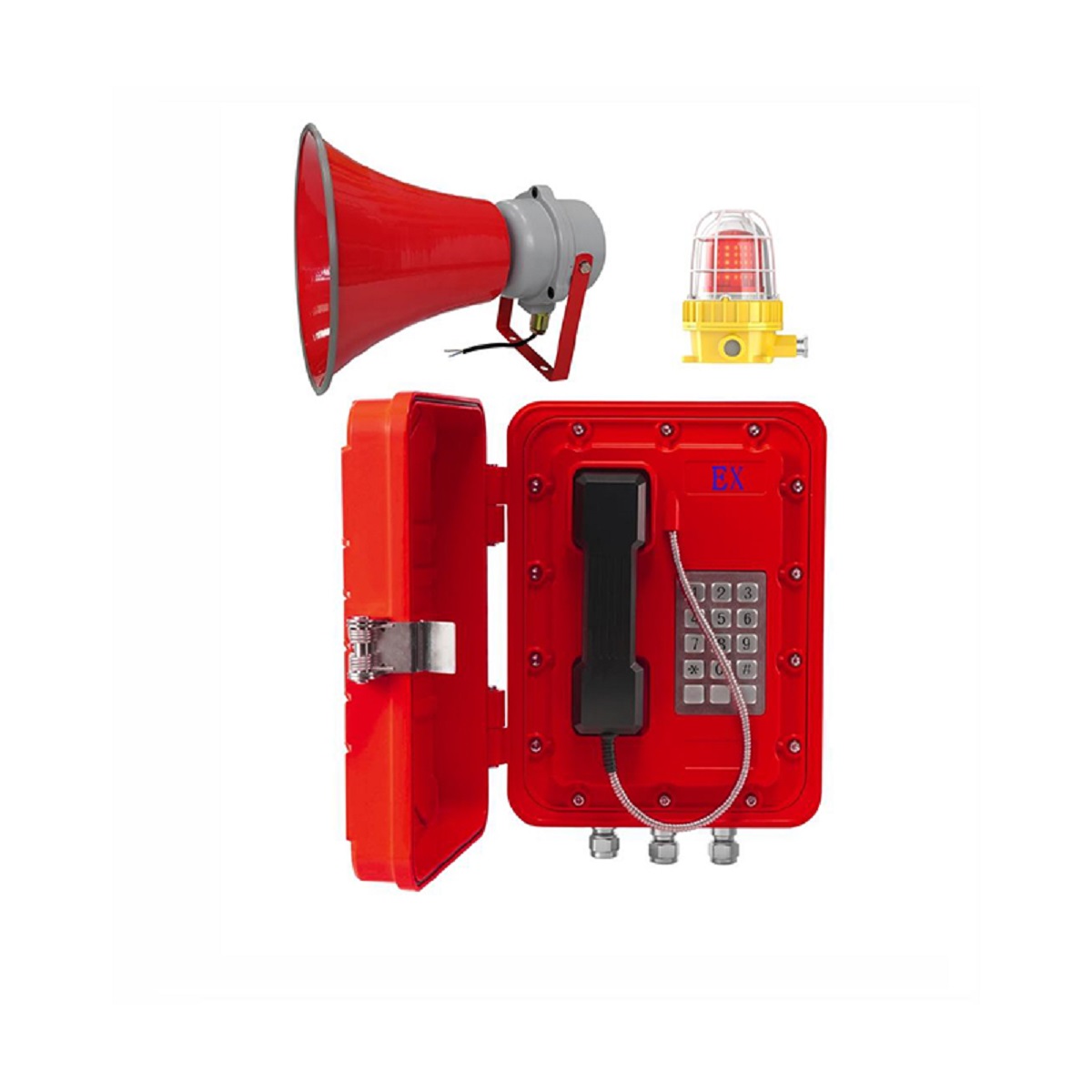
Specialized Phones (Waterproof/Explosion-Proof Type): Suitable for special
environments such as chemical plants and hazardous material warehouses.
Intercom Equipment:
Push-Button Intercom Terminals: Available in single-button, dual-button,
or triple-button configurations based on functional requirements, suitable
for simple intercom scenarios.
Video Intercom Terminals: Equipped with displays, supporting video intercom
for high-security locations like prisons and hospitals.
Industry-Specific Equipment: Specialized intercom devices for sectors like
healthcare and hospitality, meeting industry-specific communication needs.
Broadcast Equipment:
SIP Protocol Loudspeakers: Directly networked, supporting SIP protocol
for large-area broadcasting.
Traditional Analog Loudspeakers: Requires protocol conversion via gateway,
suitable for upgrading legacy systems.
Horn Loudspeakers: High-power broadcasting devices for remote public
address needs.
Wireless Solutions:
Handheld Intercom Terminals: Designed for mobile personnel, ideal for
patrols and field operators.
Cloud Intercom Mobile App: Enables intercom communication via
smartphones, suitable for dispersed or highly mobile personnel.
Wireless Broadcast Gateway: Transmits broadcast signals wirelessly,
ideal for expansive coverage areas.
A comprehensive IP broadcast intercom system relies on coordinated
terminal devices to ensure efficient operation across diverse applications.
Whether for voice intercom, video surveillance, or high-power broadcasting,
selecting appropriate equipment is critical for enhancing management
efficiency and ensuring emergency response capabilities.
Next:IP Explosion-Proof Telephone System Return to List