
Hospital IP Intercom System: The Smart Hub Redefining Healthcare Communication Efficiency
In medical settings, communication efficiency directly impacts
patient safety and care quality. Traditional call and intercom
methods struggle to meet modern hospitals' high demands for
real-time responsiveness, stability, and system integration.
IP-based hospital intercom systems are emerging as critical
infrastructure in smart hospital development.
I. Point-to-Point IP Intercom Architecture for Simplified
Deployment
This hospital IP intercom system employs a point-to-point
communication model, eliminating server requirements.
It only needs:
One network cable connecting two handsets
Power supply to establish stable communication
Core advantages include:
No server dependency for enhanced system stability
Low deployment costs and simplified maintenance
Ideal for high-reliability scenarios like patient wards and
nursing stations
Equipped with gooseneck microphone design, it significantly
enhances audio pickup in nursing stations and medical work
areas, ensuring clear communication even in noisy environments.
II. Speed Dial + Flexible Dialing for Faster Medical Response
1️⃣ Speed Dial System Design
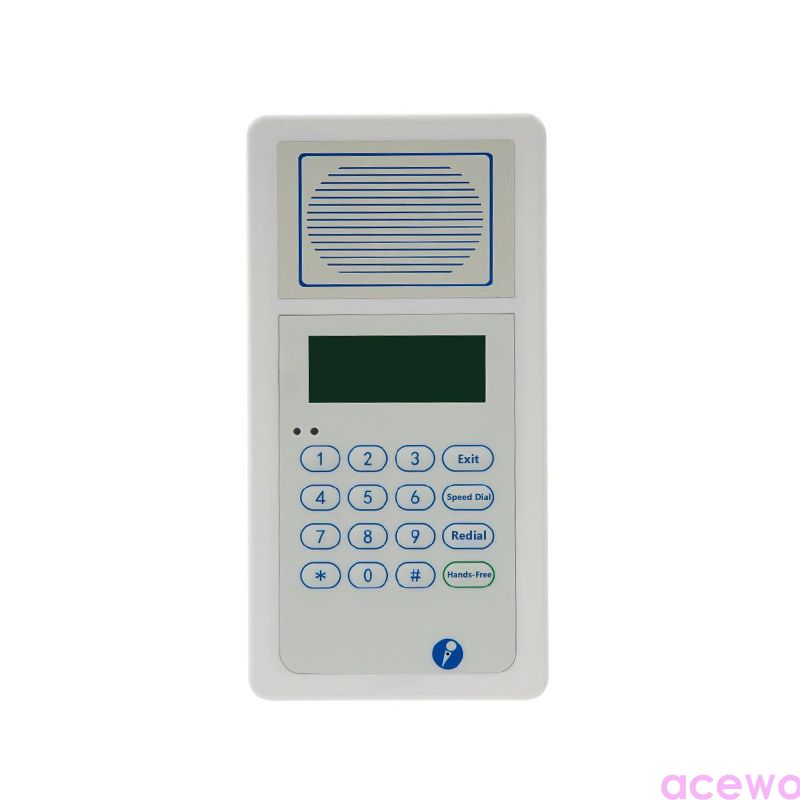
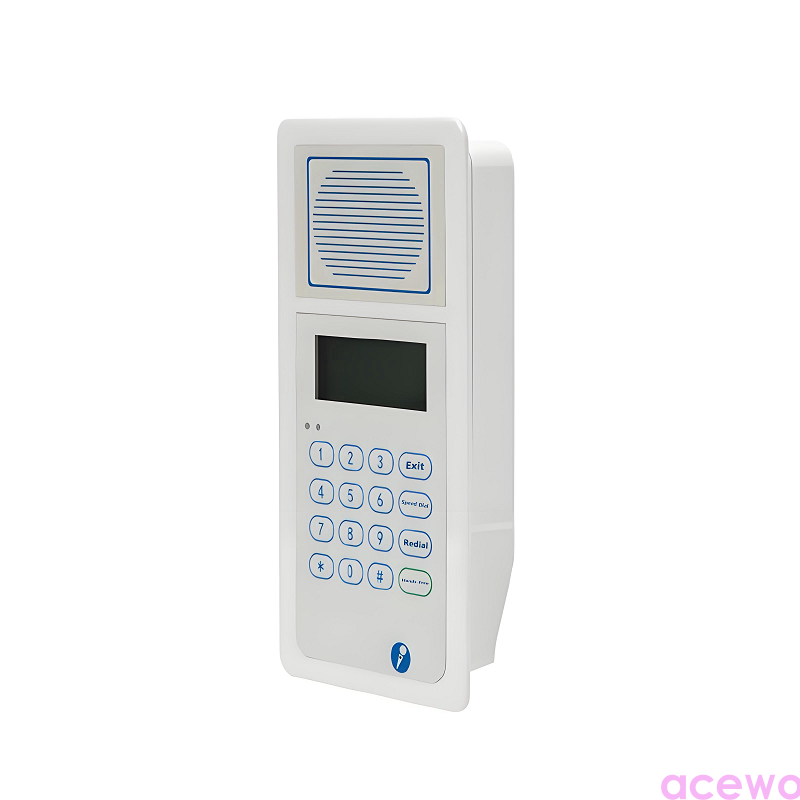
The system features 3 programmable speed dial buttons
(Speed Dial 1/2/3). Medical staff can:
Instantly call designated terminals
Achieve “second-level response” in emergencies
During demonstrations, pressing a speed dial key instantly
establishes intercom connections, drastically reducing
manual dialing time.
2️⃣ Diverse Dialing Methods
The hospital IP intercom system supports multiple flexible
dialing modes:
Abbreviated Dialing: Enter the suffix of the called device's
IP address (e.g., .0.18)
Full Address Dialing: Enter the full IP address of the
destination device (e.g., 168.0.18)
Accommodating different network configurations and user
preferences enhances system adaptability.
III. Stable and Reliable Call Quality with Clear
Status Visibility
After call establishment, the system supports real-time
voice testing with mutual confirmation between parties,
ensuring:
Clear audio without noticeable delay
Stable voice transmission for both parties
The device interface synchronously displays the call
status code “STER A2,” facilitating status identification
and maintenance management for operations personnel.
IV. Comprehensive Ward Integration for a Smart
Nursing Loop
Nursing Work Area
Nurses' station equipped with interactive dashboard
system
Medical host achieves centralized control
Corridor displays show real-time prompts like
“Keep Quiet”
System-wide time synchronization (e.g., 08:30:24)
Ward Functional Units
Door Terminals
Ward door stations clearly display bed numbers
(e.g., Beds 25–26)
Integrate mature, stable 2017 model equipment
Bedside Substations
Each bed equipped with independent IP substation
Bed 63 demonstrates standard call function
Call interface voice prompt: “Welcome to use”
Real-time call information display (e.g., “Bed 63
call received 00:27”)
V. Multi-Layer Security Alarms for Patient Safety
The hospital IP intercom system serves not only
as a communication tool but also as a critical
component of the security system:
Waterproof Alarm Extension: Supports emergency
calls
Bathroom Flood Alarm:
Alarm triggered in Bathroom 05
System generates alarm code (e.g., 164645)
Information instantly uploaded to management
terminal
Particularly suitable for high-risk areas such as
geriatric wards and rehabilitation units.
VI. Integrated System Management with Unified
Visualization
Electronic display shows dedicated medical team
info for beds 61–66
Broadcast system supports hospital-wide
announcements
Information release platform synchronizes
in real time:
Registration / Payment / Pharmacy window statuses
Timestamp display (e.g., January 10, 2026, Saturday)
Supports QR code scanning to view full contact directory,
reducing manual lookup costs
VII. Significant Application Outcomes, Data-Validated Value
In practical use, the hospital IP intercom system delivers
clear, quantifiable benefits:
Patient call response time reduced to 26 seconds
Significantly enhanced medical staff efficiency
Noticeably improved patient satisfaction
More organized medical communication and controllable
management
Next:Key Identification Points for Explosion-Proof Handsets: Stop Mistaking “Protective Covers” for Explo Return to List